Semiconductor Supply Chain: How AI Is Impacting Smartphone Prices
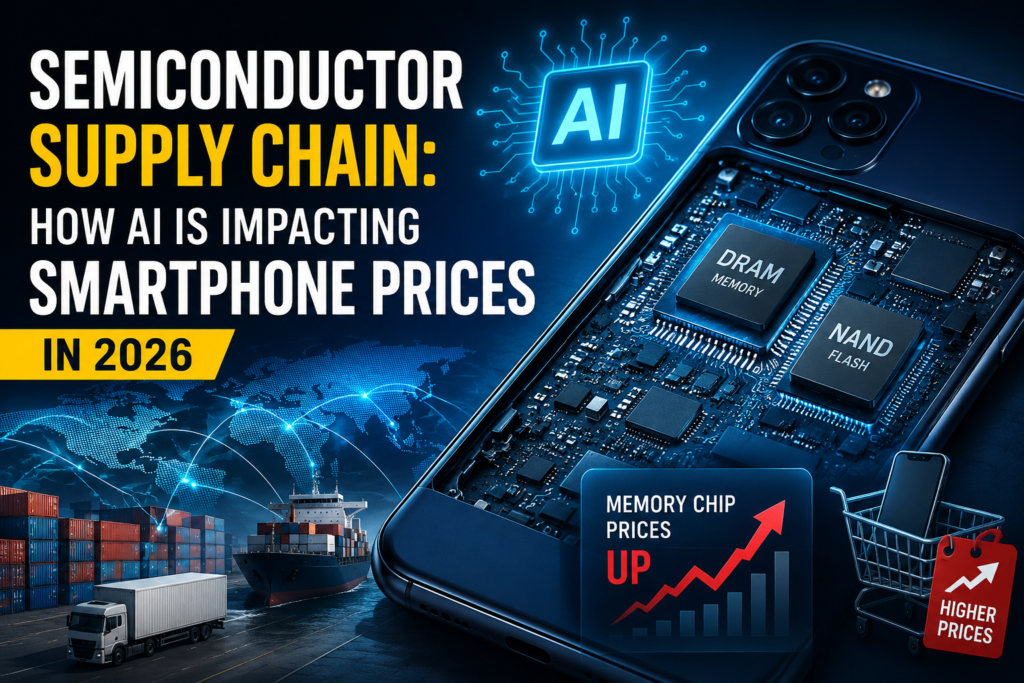
The semiconductor supply chain is going through a major transformation as artificial intelligence (AI) continues to grow rapidly. AI data centers, smartphones, laptops, and other consumer electronics all depend on semiconductor chips, but the increasing demand for AI technology is putting pressure on the global supply of memory chips.
This shift is creating concerns about rising component costs, smartphone prices, and the availability of consumer technology.
But why is AI affecting the semiconductor supply chain, and what does it mean for people planning to buy a new smartphone in 2026? Let’s understand.
What Is the Semiconductor Supply Chain?
The semiconductor supply chain is the complete network involved in producing and delivering computer chips.
It includes several important stages:
Designing semiconductor chips
Producing silicon wafers
Manufacturing chips
Packaging and testing
Transporting components
Supplying chips to technology companies
Using chips in products such as smartphones, computers, and servers
Semiconductor manufacturing requires advanced technology, specialized equipment, raw materials, and large manufacturing facilities. Because of this complexity, even a disruption at one stage can affect the entire supply chain.
Why Is the Semiconductor Supply Chain Changing?
One of the biggest reasons is the rapid growth of artificial intelligence.
AI applications require powerful computing systems and large amounts of memory. AI data centers use specialized processors and high-performance memory to train and run AI models.
As companies invest more in AI infrastructure, demand for advanced memory products has increased significantly.
This creates competition for manufacturing capacity between:
AI infrastructure → Advanced memory demand → Consumer electronics → Smartphone manufacturers
When manufacturers prioritize high-demand AI components, other types of memory can face tighter supply and higher prices.
How Is AI Increasing Memory Chip Demand?
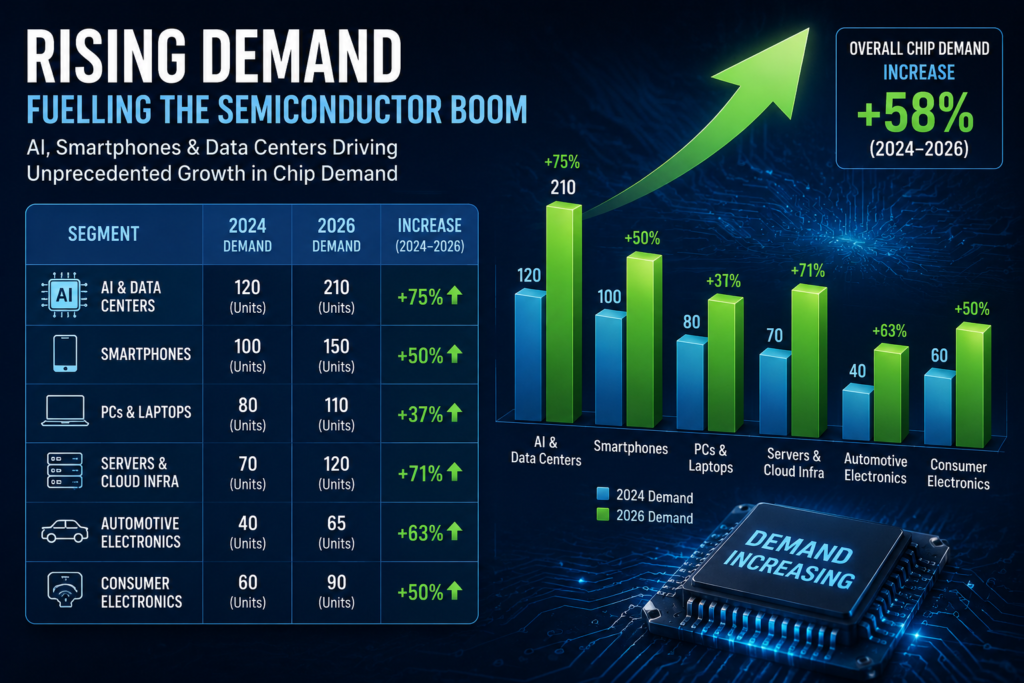
AI systems need large amounts of data to be processed quickly. This requires high-performance memory technologies such as High Bandwidth Memory (HBM).
HBM is designed to provide very high memory bandwidth for AI processors and data-center workloads.
At the same time, smartphones use memory technologies such as DRAM and NAND flash for RAM and storage.
Although these products are not identical, they compete for manufacturing resources and capacity within the broader memory-chip industry.
As AI-related demand grows, manufacturers are increasing investment in AI-focused memory production.
This can put pressure on the supply available for consumer electronics.
What Is a Memory Chip Shortage?
A memory chip shortage happens when demand for memory components becomes higher than available supply.
Memory chips are essential components in modern smartphones. They help devices run applications, store data, and handle multiple tasks.
When memory becomes more expensive, smartphone manufacturers face higher production costs.
Manufacturers then have several choices:
Increase smartphone prices
Reduce profit margins
Use less memory
Offer different storage configurations
Pass some of the additional cost to consumers
This is why memory chip prices can have a direct effect on the smartphone market.
How Can Semiconductor Supply Chain Prices Affect Smartphones?
Smartphones contain many components, including:
Processor
Display
Camera sensors
Battery
Memory
Storage
Connectivity components
Memory and storage are important parts of the overall manufacturing cost.
If memory chip prices rise significantly, the smartphone manufacturing costs can also increase.
For example, imagine a smartphone manufacturer planned to sell a device at a particular price. If the cost of memory and storage increases, the company may need to reconsider its pricing strategy.
It could increase the retail price or reduce other costs to maintain its margins.
Therefore, rising memory costs can contribute to higher smartphone prices.
Will Smartphone Prices Rise in 2026?
The pressure on smartphone prices is real, but the exact impact will vary by company, model, market, and component costs.
Premium smartphones may have more room to absorb higher component costs because manufacturers generally have greater flexibility in pricing.
Budget smartphones can face greater pressure because their profit margins are often smaller.
Manufacturers may respond by:
Higher component costs → Higher production costs → Higher prices or changed specifications
This does not mean every smartphone will become more expensive by the same amount. Companies may use different strategies depending on their target customers and product categories.
Why Budget Smartphones Could Be More Affected
The entry-level and budget smartphone markets are particularly sensitive to component costs.
A small increase in manufacturing costs can make a bigger difference to an affordable device.
Instead of increasing the price significantly, a manufacturer might change the specifications.
For example, a future phone could offer a different RAM or storage configuration while keeping its overall price competitive.
This means consumers may not always see the impact of higher memory costs as a simple price increase.
Sometimes, the change could appear as a difference in specifications.
The Role of Semiconductor Manufacturers
Major memory manufacturers are investing heavily in new production capacity and advanced technologies.
Companies are focusing on meeting the growing demand for AI-related memory while also supplying traditional memory products used in smartphones, PCs, and other electronics.
Expanding semiconductor manufacturing capacity is not an instant process.
New production facilities require significant investment, advanced equipment, skilled workers, and time.
Because of this, supply cannot always increase as quickly as demand.
How Does Semiconductor Supply Chain Affect Consumer Technology?
The impact is not limited to smartphones.
Memory chips are used in many products, including:
Laptops
Tablets
Gaming devices
Servers
Smart devices
Automotive electronics
Consumer electronics
If semiconductor component costs remain elevated, manufacturers across these industries could face higher production expenses.
This can influence product pricing, specifications, inventory decisions, and launch strategies.
Semiconductor Supply Chain and India
India is becoming an increasingly important market for smartphones and electronics manufacturing.
The country has been encouraging semiconductor manufacturing and electronics production through government initiatives and investments.
A stronger domestic semiconductor ecosystem could help India become more resilient to global supply-chain disruptions over time.
However, semiconductor manufacturing is a complex industry, and building a complete ecosystem takes years.
For Indian consumers, global memory prices and international semiconductor supply conditions can still influence smartphone prices.
What Does This Mean for Consumers?
For consumers, the biggest takeaway is that AI is affecting more than just AI applications and data centers.
The growing AI industry is also influencing the wider technology supply chain.
If memory demand continues to grow rapidly, smartphone manufacturers may need to carefully manage:
Memory costs
Storage options
Device pricing
Production volumes
Product specifications
Consumers may therefore see changes in smartphone prices or configurations as manufacturers adjust to changing component costs.
China’s CXMT Enters the Smartphone Memory Market
China’s memory chip manufacturer CXMT (ChangXin Memory Technologies) is also becoming an important player in the smartphone memory market. In August 2026, CXMT announced that it would supply LPDDR6 memory for Xiaomi’s upcoming foldable smartphone.
LPDDR6 is a newer generation of low-power memory designed to provide improved performance and efficiency for modern mobile devices.
CXMT’s entry into advanced smartphone memory is significant because it could increase competition in the global memory-chip market. More suppliers can give smartphone manufacturers additional sourcing options as they deal with rising memory costs and pressure on the semiconductor supply chain.
The development also highlights how China is expanding its domestic semiconductor capabilities and competing in increasingly advanced memory technologies.
For smartphone companies and consumers, greater competition among memory-chip suppliers could eventually help improve supply flexibility and reduce dependence on a small number of global manufacturers.
Conclusion
The global semiconductor supply chain is changing as AI becomes a larger part of the technology industry.
The growing demand for AI infrastructure and advanced memory is putting pressure on semiconductor manufacturing capacity. At the same time, smartphones and other consumer devices continue to depend heavily on memory and storage components.
Higher memory chip costs can increase smartphone manufacturing costs and potentially lead to higher prices or changes in device specifications.
For consumers, this means the next smartphone they buy could be influenced not only by its features and brand but also by developments happening deep inside the global semiconductor supply chain.
As AI continues to expand, the relationship between AI chip demand, memory chip prices, and consumer technology will be an important trend to watch throughout 2026.