What Is a Landing Page ?

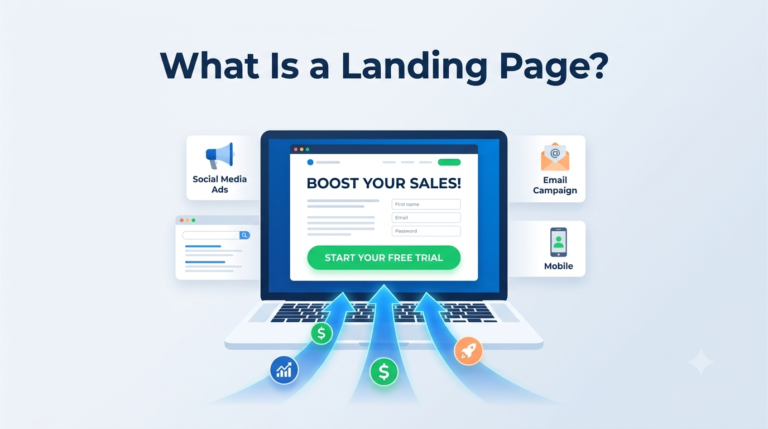
A modern vector illustration of a laptop showing a landing page with traffic arrows pointing to a green Call to Action button

A landing page is a dedicated, standalone web page created specifically for a digital marketing or online advertising campaign. It serves as the exact destination where a web visitor “lands” after clicking on a promotional link in an email, a social media ad, a search engine advertisement, or a sponsored campaign.

Unlike a traditional homepage that encourages users to explore multiple site topics, a high-converting landing page is built with a single, laser-focused objective known as a Call to Action (CTA). By eliminating unnecessary navigation menus and distracting links, this targeted campaign page seamlessly guides the user toward completing one specific action—such as subscribing to a newsletter, registering for a live webinar, or making a direct product purchase.


Landing Page vs. Homepage: Understanding the Key Differences

A common mistake made by web beginners is directing paid campaign traffic straight to their company’s homepage. While a homepage serves an important purpose, it is usually the wrong tool for converting targeted ad traffic.

The Purpose of a Homepage

A homepage is the front door to your business. Its main job is to introduce your brand, explain the full scope of what you do, and give visitors a way to navigate to many different parts of your site. Because it has many jobs to do, a homepage contains dozens of clickable links, navigation menus, blog posts, and company news. This variety is great for organic search exploration, but it creates distraction for a user who clicked a specific ad.

The Purpose of a Landing Page

A landing page has only one job. It matches the exact promise made in the advertisement or link that brought the user there. It strips away top navigation bars, footer directory links, and unrelated product offers. By narrowing down the visitor’s choices to two simple options—either complete the desired action or leave the page—landing pages achieve significantly higher conversion rates than general homepages.

Core Types of Landing Pages

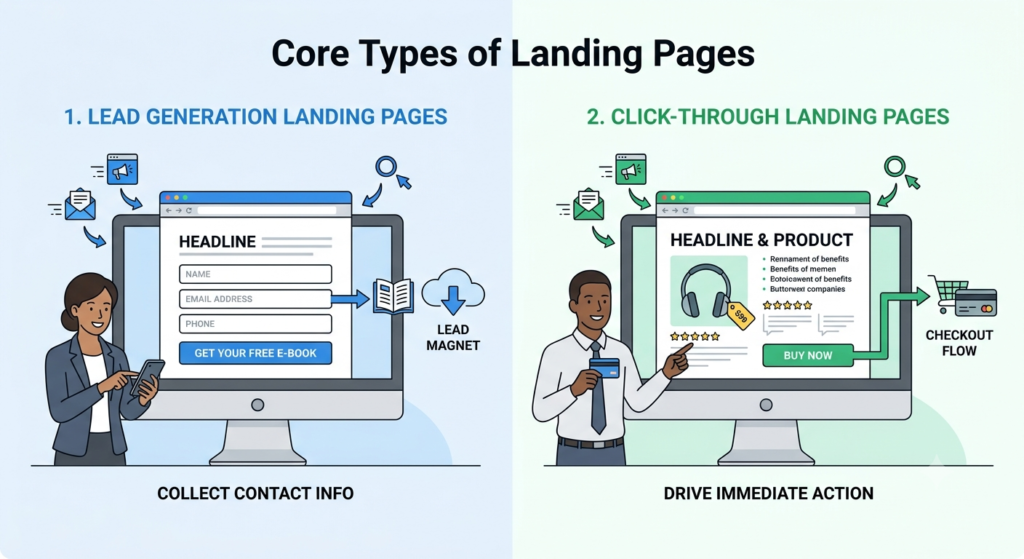
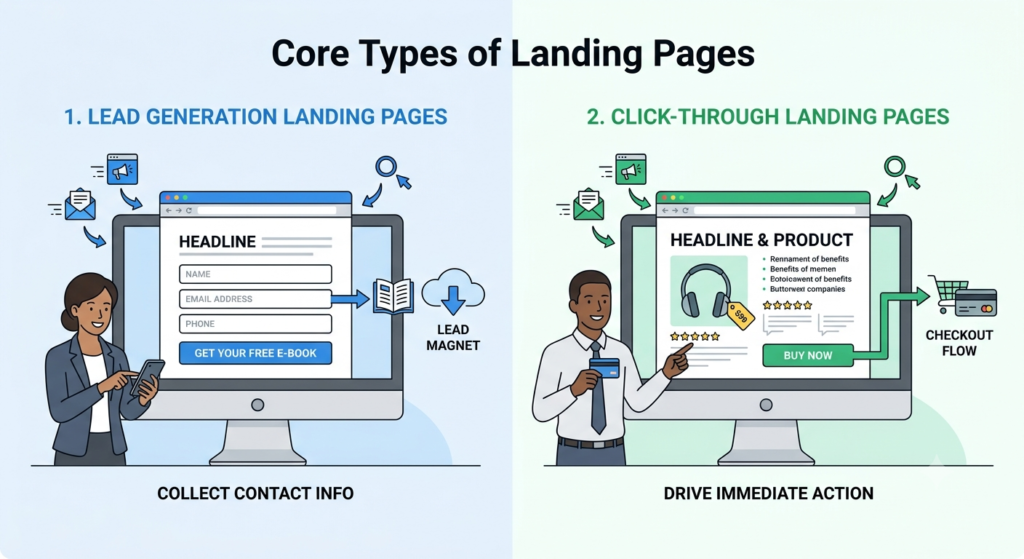
Side-by-side visual comparison of two core landing page types: a lead generation page capturing contact details and a click-through page driving users to checkout

Depending on your specific marketing goals, landing pages generally fall into two main categories:

1. Lead Generation Landing Pages

Also referred to as lead capture pages, these are designed to gather contact information from prospective customers. They typically feature a form where visitors input details like their name, email address, job title, or phone number. In exchange, the visitor receives a valuable resource known as a lead magnet. Common lead magnets include free e-books, whitepapers, webinar registrations, or discount codes.

2. Click-Through Landing Pages

Click-through landing pages are commonly used in e-commerce and direct sales. Instead of a contact form, the goal of a click-through page is to warm up the visitor and convince them to buy a product or service. The page provides detailed information about the offer, including benefits, pricing, and customer reviews, and features a prominent button that sends the user directly into a checkout or sign-up flow.
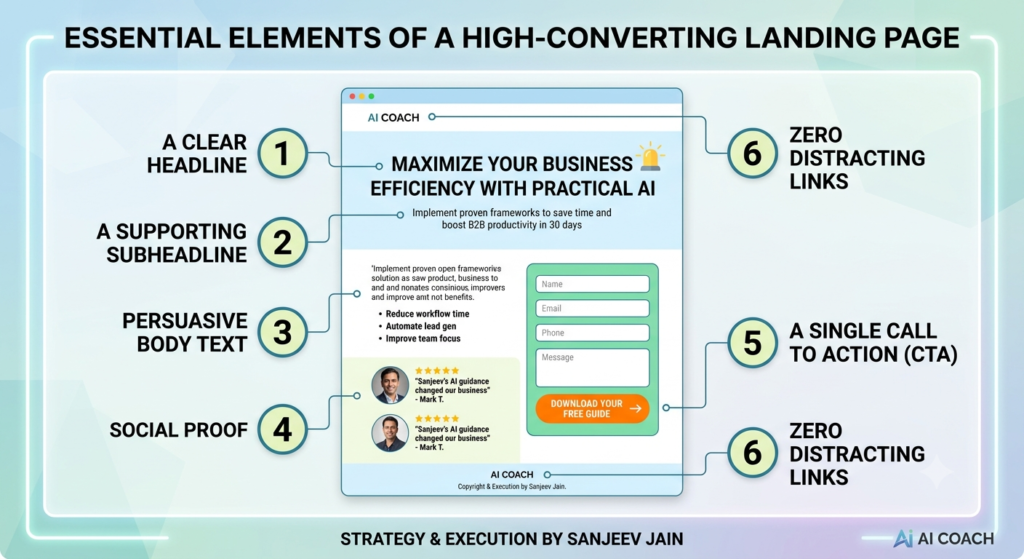
Essential Elements of a High-Converting Landing Page


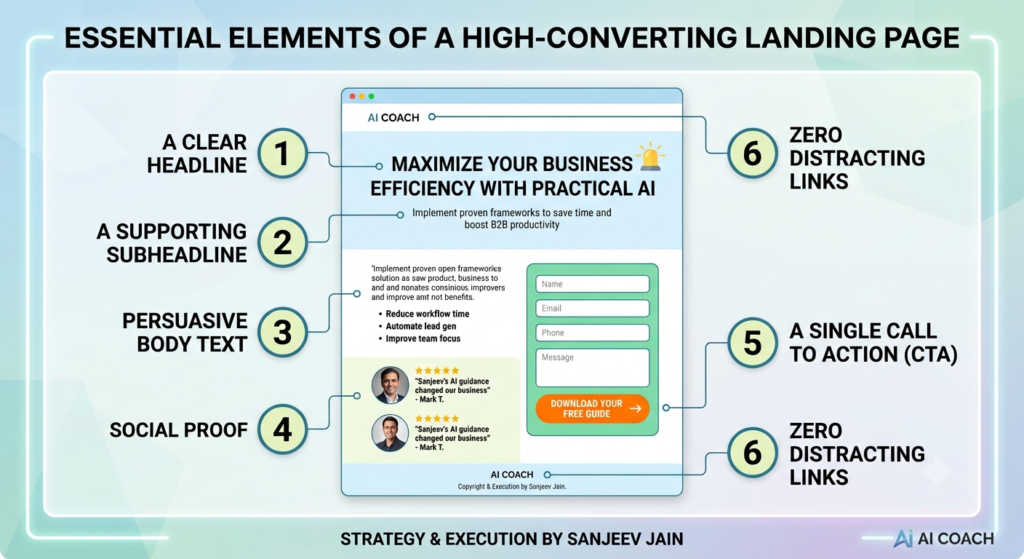
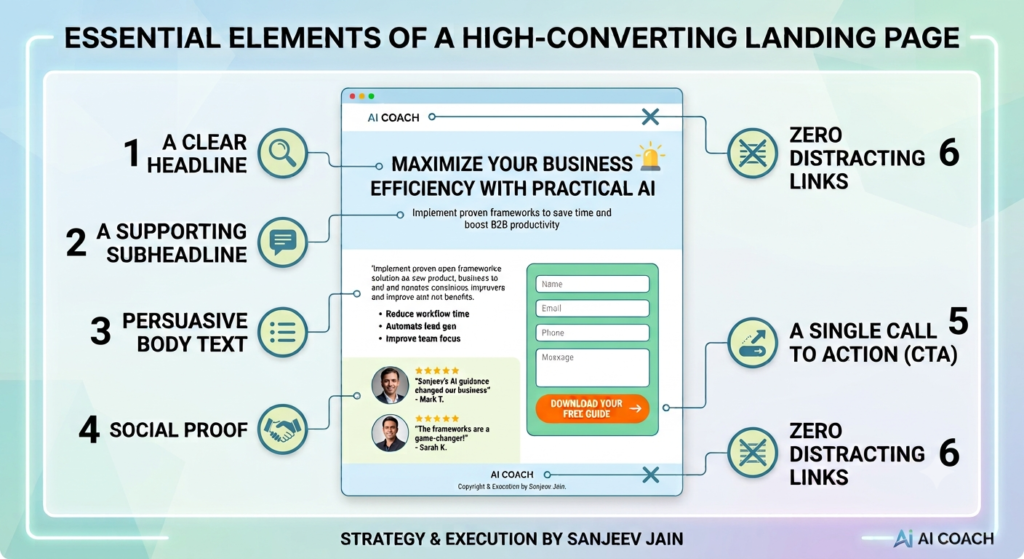
To write and build a landing page that successfully turns traffic into leads or sales, you need to include several fundamental building blocks:

  • A Clear Headline: Your main headline is the first thing a visitor reads. It should clearly state the core benefit of your offer and grab attention within a few seconds.

  • A Supporting Subheadline: Positioned directly below the headline, the subheadline provides additional context, explaining how your product or service solves the reader’s problem.

  • Persuasive Body Text: Keep your copy brief, clear, and easy to skim. Use short paragraphs and bulleted lists to highlight the key advantages of your offer rather than listing technical features.

  • Social Proof: People trust the experiences of others. Incorporating client testimonials, customer quotes, star ratings, or industry badges builds instant credibility and lowers buyer hesitation.

  • A Single Call to Action (CTA): Your CTA button should stand out visually from the rest of the page. Use action-oriented text that clearly tells the user what happens when they click, such as “Download Your Guide” or “Start Your Free Trial.”

  • Zero Distracting Links: Remove standard site menus, social media share icons, and external links so that visitors remain focused on your core message

Why Landing Pages Are Critical for Digital Marketing Success

Investing time in creating targeted landing pages delivers several concrete benefits for online businesses and marketers:

  1. Higher Conversion Rates: By aligning the page content directly with the user’s intent and eliminating distractions, landing pages consistently outperform general website pages in generating leads and sales.

  2. Improved Advertising Performance: Ad platforms like Google Ads evaluate how relevant your destination page is to your ad text. A well-matched landing page leads to better ad relevance scores, which can lower your overall advertising costs.

  3. Easier Testing and Analytics: Because a landing page has one goal and one traffic source, measuring its success is straightforward. You can easily test different headlines, button colors, or copy variations to see which version performs best over time.

Leave a Reply

Your email address will not be published. Required fields are marked *

Table of Contents